


 Leverage, regulatory stress tests and concession rebalancing are reshaping the discussion around Brazil’s sanitation sector.
In an interview with Debtwire, Saulo Puttini comments on the structure behind the proposed Copasa transaction and the broader market dynamics following the expansion cycle triggered by the new sanitation framework.
The following article was written by Aline Lima and Fabiana Lopes.
Aegea's shareholder-supported bid for Copasa has mitigated the risk of additional covenant stress in the short term, according to four credit analysts and a banker. However, high leverage continues to pressure the Brazilian water sanitation firm's credit profile and growth strategy, they said.
Aegea and its shareholders, Itaúsa, GIC, and Equipav Saneamento, have submitted a proposal to acquire a 30% stake in Copasa, a sanitation company controlled by the state of Minas Gerais, through the investment vehicle Livorno Participações. In this structure, Aegea will own a 1% stake in Livorno, while its three shareholders would each hold 33%.
“As the bid was not made directly by Aegea, this will not compromise the companyʼs leverage directly,” said the banker.
Aegea will need to leave the new asset off-balance sheet in a ring-fenced structure to avoid risks and more pressure on its covenants, Bruno Ferreira, analyst at S&P, told Debtwire.
Even with such a structure, however, Aegea still could face challenges with integration, including the need for higher investments and delayed dividends, Ferreira said. “We see the covenants as quite tight to manage a new acquisition, even if it is financed by the shareholders,” he said.
However, to assess the real risk and impact on the company, the market will need to understand the terms and conditions of the proposal made to Copasa, Flavia Bedran, also an S&P analyst, told Debtwire.
Copasa announced this week that it would amend terms and the timeline for the privatization, wihich involves the offering of secondary shares owned by the government of Minas Gerais, setting the minimum price of BRL 47.23 per share today (28 May).
“Maybe Aegea will do work on the concession, but it would be by contract,” said a sell side credit analyst. “I think this transaction will be done completely separate from Aegea and present no risk to the company.”
With the stake not being consolidated, Copasa will only direct cash flows to Aegea through proportional dividends, which may remain limited in the early years, as the asset may require high investments at first, Ferreira said.
Copasa is a healthy company, but it is not efficient, Saulo Puttini, partner at the Levy & Salomão Advogados law firm in Brazil, told Debtwire.
It operates in densely populated regions in the state of Minas Gerais, which are more profitable, Puttini said. “It is a potentially very good asset, very similar to [São Paulo water and sanitiation firm] Sabesp,” he said.
Consolidated assets and covenants
Aegea consolidates the subsidiaries in which it has voting rights, such as Corsan, Guariroba, Prolagos, Águas de Manaus, Águas de Teresina, Palhoça, Ambiental Paraná, and other smaller businesses, according to the firmʼs financial documents. Copasa, however, would likely be treated in the same way as Águas do Rio and Parsan, using the equity method of accounting rather than full consolidation Ferreira said.
The decision to bid for a stake in Copasa with the support of shareholders and using the off-balance sheet structure had already been mentioned by CEO Radamés Casseb on Aegea's 7 May conference call.
The support from shareholders shows that Aegea can no longer replicate the aggressive growth strategy it has used since 2021 if it wants to reduce its leverage and avoid breaking debt covenants, Ferreira from S&P said.
Aegeaʼs net debt-to-EBITDA ratio was 3.89x at the end of 1Q26 on a consolidated view, or 4.43x considering the ecosystem, which includes companies and concessions not consolidated in the balance sheet, according to the companyʼs presentation. Covenants on some of its debt limit the leverage to 4x, considering the consolidated view.
Leverage with less than 10% headroom under covenant limits leaves Aegea with very limited room to absorb any operational or cost-related setbacks, according to Ferreira.
The main credit pressure is the quarterly‑tested covenant on Aegea's USD 680m syndicated loan, Gabriel Gomes, also an analyst at S&P, told Debtwire, adding that the tests on a smaller gap of time limits the companyʼs financial flexibility.
The USD 630m syndicated loan is the only debt with covenants tested quarterly, according to Aegea Reference form. The USD 250m 6.75% 2029 bond, the USD 800m 9% 2031 notes and the USD 750m 7.625% 2036 blue notes have a 4x leverage covenant as well, but it is tested only when Aegea takes specific actions such as raising new debt or paying dividends.
If Aegea breaks its covenants there is probably room for a waiver or amendment, but it would come at a cost, Juan Manuel Patiño, Investment Analyst at SunCapital Valores, told Debtwire. “Given the current credibility issues, syndicated lenders for example are unlikely to offer flexibility without asking for concrete concessions first, likely formal dividend restrictions, tighter M&A limits, and potentially a fee,” he said.
Considering the need to deleverage, Aegea may face challenges to refinance debt or raise new capital if needed, Patiño said. “With bonds trading around 10%-11% yields, offshore market access is effectively closed for now,” he said, adding that any market operation today would be extremely expensive and likely value destructive.
Aegeaʼs 2031 bond traded at 97 today to yield 9.80%, according to MarketAxess. The 2036 traded at 82 today to yield 10.643% and the USD 250m 6.75% 2029 bond traded at 90.940 to yield 10.365% today.
The most reasonable way would be to rely on the local market first, Patiño said.
Companies in the sanitation sector, in general, are highly leveraged, Puttini said. This occurs because these companies have raised debt and are executing capex while, at the same time, are facing renegotiations for the financial rebalancing of concession contracts with the public sector, he said. This is the case of Aegea and its subsidiaries in the states of Rio de Janeiro and Rio Grande do Sul, he added.
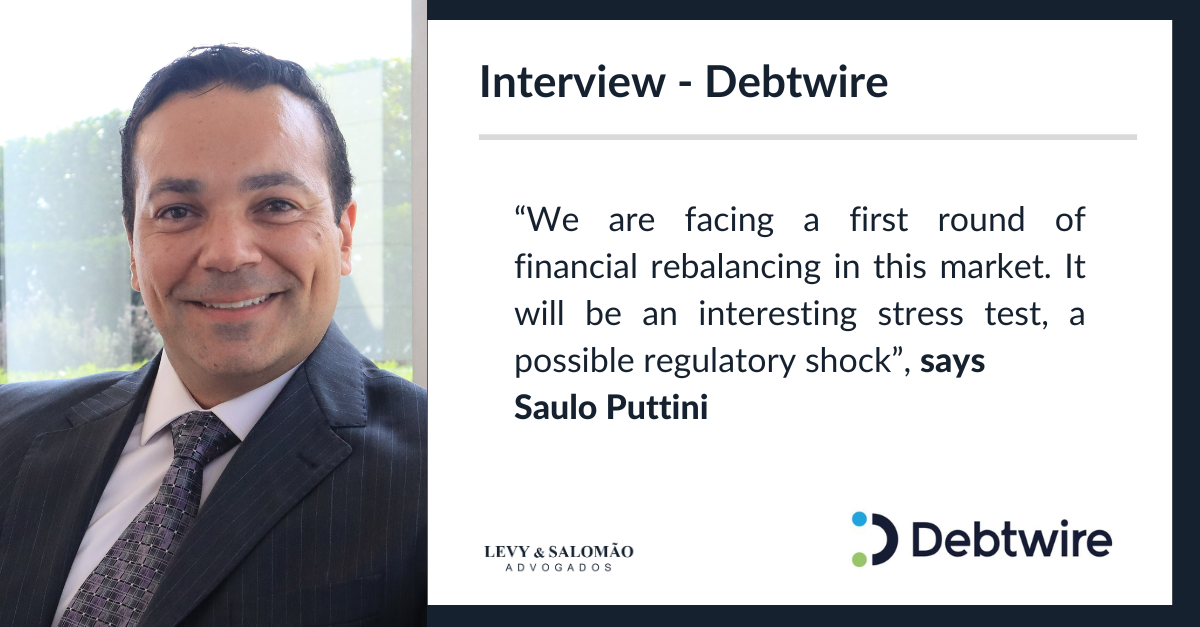
These subsidiaries are questioning information contained in the bidding documents, which do not reflect the reality found in the concessions. “We are seeing a first round of financial rebalancing in this market. It will be an interesting stress test, a regulatory shock,” Puttini said.
The industry is in a maturing phase, following a wave of auctions that began in 2020 with the new legal framework for basic sanitation, Puttini explained. “Each project is very different from the other; they are not comparable. Having several assets does not mean that there is risk dilution."
On the 7 May conference call, CFO André Pires de Oliveira Dias said Aegea has no funding needs over the next 12-15 months. He also mentioned the company wants to reach a net debt-to-EBITDA of 3x at the holding level over the next 12-18 months through EBITDA growth, cash generation and capital discipline, as reported.
An Aegea representative did not respond to a request for comment.


